

Hey there! As a supplier of Multi - function Reactors, I've been getting a lot of questions lately about the vibration characteristics of these amazing pieces of equipment. So, I thought I'd take a moment to share some insights with you all.
First off, let's understand what a Multi - function Reactor is. It's a highly versatile piece of machinery that can be used for a wide range of chemical and industrial processes. Whether it's mixing, heating, cooling, or reacting different substances, these reactors are up for the task. And their vibration characteristics play a crucial role in their performance and efficiency.
Types of Vibrations in Multi - function Reactors
There are mainly two types of vibrations that we commonly observe in Multi - function Reactors: forced vibrations and natural vibrations.
Forced vibrations occur when an external force is applied to the reactor. This could be due to the operation of internal components like agitators, pumps, or the flow of fluids through the system. The frequency of these forced vibrations is determined by the source of the external force. For example, if an agitator is rotating at a certain speed, it will generate vibrations at a frequency related to its rotational speed.
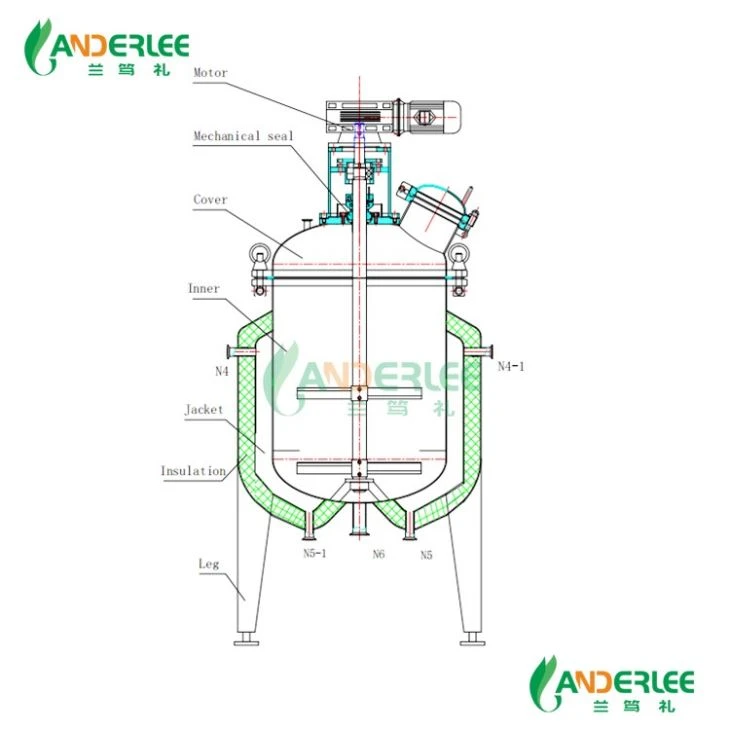

Natural vibrations, on the other hand, are the inherent vibrations of the reactor structure itself. Every object has a set of natural frequencies at which it tends to vibrate when disturbed. In a Multi - function Reactor, these natural frequencies are determined by factors such as the material of the reactor, its shape, and its dimensions. When the frequency of the forced vibrations matches one of the natural frequencies of the reactor, a phenomenon called resonance occurs. Resonance can be a big problem as it can cause excessive vibrations, which may lead to structural damage, reduced efficiency, and even safety hazards.
Factors Affecting Vibration Characteristics
Several factors can influence the vibration characteristics of a Multi - function Reactor.
1. Design and Structure
The design of the reactor plays a significant role in determining its vibration behavior. A well - designed reactor will have a structure that can withstand the forces generated during operation without excessive vibration. For example, the shape of the reactor can affect how it distributes the forces acting on it. A reactor with a more streamlined shape may experience less vibration compared to one with a complex or irregular shape.
The material used in the construction of the reactor also matters. Different materials have different mechanical properties, such as stiffness and damping. Stiff materials can resist deformation and reduce vibration, while damping materials can absorb the energy of vibrations and prevent them from building up.
2. Operating Conditions
The way the reactor is operated can also have a big impact on its vibration characteristics. The speed of the agitator, the flow rate of the fluids, and the temperature and pressure inside the reactor all affect the forces acting on the structure. For instance, if the agitator is running at a very high speed, it will generate more powerful vibrations. Similarly, a high - flow rate of fluids can cause more turbulence and vibrations.
3. Maintenance and Installation
Proper maintenance and installation are crucial for keeping the vibration levels in check. A reactor that is not installed correctly may be more prone to vibrations. For example, if the reactor is not properly leveled, it can cause uneven distribution of forces and lead to excessive vibration. Regular maintenance, such as checking the alignment of components, lubricating moving parts, and replacing worn - out parts, can also help reduce vibrations.
Importance of Understanding Vibration Characteristics
Understanding the vibration characteristics of a Multi - function Reactor is essential for several reasons.
1. Safety
Excessive vibrations can pose a significant safety risk. They can cause structural damage to the reactor, leading to leaks or even explosions in extreme cases. By monitoring and controlling the vibration levels, we can ensure the safety of the operators and the surrounding environment.
2. Efficiency
Vibrations can also affect the efficiency of the reactor. When a reactor vibrates excessively, it can disrupt the normal flow of fluids and the mixing process. This can lead to incomplete reactions, reduced product quality, and increased energy consumption. By optimizing the vibration characteristics, we can improve the overall efficiency of the reactor.
3. Longevity
Reducing vibrations can extend the lifespan of the reactor. Excessive vibrations can cause wear and tear on the components, leading to premature failure. By keeping the vibration levels under control, we can reduce the maintenance costs and increase the reliability of the reactor.
Specialized Reactors and Their Vibration Considerations
We offer a variety of specialized Multi - function Reactors, such as the Winterization Reactor and the Crystal Reactor.
The Winterization Reactor is used for the winterization process, which involves removing waxes and other impurities from oils. In this reactor, the vibration characteristics need to be carefully controlled to ensure proper mixing and separation of the components. Excessive vibrations can disrupt the sedimentation process and affect the quality of the final product.
The Crystal Reactor, on the other hand, is used for crystallization processes. Precise control of vibrations is crucial in this reactor to promote the growth of high - quality crystals. If the vibrations are too strong, they can break the growing crystals, while if they are too weak, the crystals may not form properly.
Monitoring and Controlling Vibration
To ensure the optimal performance of our Multi - function Reactors, we use advanced monitoring systems to measure the vibration levels. These systems can detect even small changes in vibration and alert us if there are any potential issues.
We also take several measures to control the vibrations. This includes using vibration - damping materials, optimizing the design of the reactor, and adjusting the operating conditions. For example, we can change the speed of the agitator or the flow rate of the fluids to reduce the vibrations.
Conclusion
In conclusion, the vibration characteristics of a Multi - function Reactor are complex and depend on many factors. Understanding these characteristics is crucial for ensuring the safety, efficiency, and longevity of the reactor. Whether you're using a Winterization Reactor or a Crystal Reactor, proper management of vibrations is essential.
If you're in the market for a Multi - function Reactor or have any questions about their vibration characteristics, don't hesitate to reach out. We're here to help you find the perfect solution for your needs. Let's have a chat and see how we can work together to make your processes more efficient and reliable.
References
- Smith, J. (2018). "Advanced Chemical Reactors: Design and Operation". Publisher: Chemical Press.
- Johnson, A. (2020). "Vibration Analysis in Industrial Equipment". Journal of Industrial Engineering, 25(3), 123 - 135.