

A multi - function reactor is a versatile piece of equipment widely used in various industries, including chemical, pharmaceutical, and food processing. It can perform multiple tasks such as mixing, heating, cooling, and chemical reactions. To ensure its optimal performance and longevity, proper cleaning is essential. In this blog, as a multi - function reactor supplier, I will discuss the cleaning agents suitable for a multi - function reactor.
Understanding the Cleaning Requirements of a Multi - function Reactor
Before selecting a cleaning agent, it is crucial to understand the nature of the residues that may accumulate in the reactor. These residues can vary depending on the processes carried out in the reactor. For example, in a chemical synthesis process, there may be chemical by - products, catalysts, and unreacted raw materials. In a pharmaceutical manufacturing process, there could be active pharmaceutical ingredients (APIs), excipients, and microbial contaminants.
The cleaning process should not only remove visible residues but also eliminate any potential cross - contamination risks. Moreover, the cleaning agents used should be compatible with the reactor's materials of construction, such as stainless steel, glass - lined steel, or exotic alloys, to prevent corrosion or damage.
Types of Cleaning Agents
Alkaline Cleaning Agents
Alkaline cleaning agents are widely used for cleaning multi - function reactors. They are effective in removing organic residues, such as fats, oils, and proteins. Alkaline solutions typically contain sodium hydroxide (NaOH), potassium hydroxide (KOH), or sodium carbonate (Na₂CO₃).
Sodium hydroxide is a strong alkali that can break down complex organic compounds through saponification and hydrolysis reactions. It is highly effective in removing grease and oil residues. However, it is also corrosive and can damage certain materials, especially at high concentrations and elevated temperatures. Therefore, when using sodium hydroxide as a cleaning agent, it is necessary to carefully control the concentration, temperature, and contact time.
Potassium hydroxide is another strong alkaline agent with similar cleaning properties to sodium hydroxide. It is often preferred in some applications because it is more soluble in water than sodium hydroxide, which can make it easier to prepare cleaning solutions.
Sodium carbonate is a milder alkaline agent. It is less corrosive than sodium hydroxide and potassium hydroxide and can be used for less stubborn organic residues. It is also environmentally friendly and relatively safe to handle.
Acidic Cleaning Agents
Acidic cleaning agents are suitable for removing inorganic residues, such as metal oxides, mineral salts, and scale deposits. Common acids used in reactor cleaning include hydrochloric acid (HCl), nitric acid (HNO₃), and phosphoric acid (H₃PO₄).
Hydrochloric acid is a strong acid that can dissolve many metal oxides and carbonate salts. It is commonly used for descaling and removing rust from stainless steel reactors. However, it is highly corrosive and releases toxic fumes, so proper ventilation and personal protective equipment (PPE) are required when using it.
Nitric acid is also a strong oxidizing acid. It can effectively remove metal contaminants and passivate stainless steel surfaces, which helps prevent future corrosion. Nitric acid is often used in the pharmaceutical and food industries due to its ability to meet strict hygiene standards.
Phosphoric acid is a milder acid compared to hydrochloric and nitric acids. It is less corrosive and can be used for cleaning reactors made of sensitive materials. Phosphoric acid is also used in some applications to passivate metal surfaces and inhibit corrosion.
Solvent - based Cleaning Agents
Solvent - based cleaning agents are used for removing non - polar organic residues, such as resins, polymers, and waxes. Common solvents include alcohols (e.g., ethanol, isopropanol), acetone, and toluene.
Ethanol and isopropanol are widely used in the pharmaceutical and food industries because they are relatively non - toxic and can be easily removed by evaporation. They are effective in dissolving many organic compounds and can also have some antibacterial properties.
Acetone is a powerful solvent that can dissolve a wide range of organic materials. It has a low boiling point, which makes it easy to evaporate after cleaning. However, it is highly flammable and should be used with caution in well - ventilated areas.
Toluene is a strong solvent for dissolving polymers and resins. It is often used in the chemical industry for cleaning reactors that have been used in polymerization processes. But toluene is toxic, and its use requires strict safety measures.
Enzymatic Cleaning Agents
Enzymatic cleaning agents are a relatively new type of cleaning agent for multi - function reactors. They contain specific enzymes that can break down organic residues into smaller, more soluble molecules. Enzymes are highly specific in their action, which means they can target particular types of organic compounds.
For example, proteases can break down proteins, lipases can break down fats and oils, and amylases can break down starches. Enzymatic cleaning agents are environmentally friendly and mild on reactor materials. They are often used in the pharmaceutical and food industries where strict hygiene and material compatibility requirements are in place.
Selecting the Right Cleaning Agent
When selecting a cleaning agent for a multi - function reactor, several factors need to be considered:
- Nature of Residues: As mentioned earlier, the type of residues in the reactor will determine the most suitable cleaning agent. Organic residues are better removed by alkaline or enzymatic cleaning agents, while inorganic residues require acidic cleaning agents.
- Materials of Construction: The cleaning agent should be compatible with the materials of the reactor. For example, strong acids and alkalis can corrode certain metals and alloys. Glass - lined reactors are more sensitive to mechanical damage and may require milder cleaning agents.
- Process Requirements: Some processes may have specific requirements for the cleaning agent. For example, in the pharmaceutical industry, the cleaning agent must be able to meet strict regulatory standards for cleanliness and residual levels.
- Environmental and Safety Considerations: The cleaning agent should be environmentally friendly and safe to handle. Agents that release toxic fumes or are highly flammable should be used with proper safety precautions.
Application of Cleaning Agents
The application of cleaning agents can be carried out through various methods, such as manual cleaning, spray cleaning, and circulation cleaning.
Manual cleaning involves using brushes, sponges, or other tools to apply the cleaning agent to the reactor surfaces. This method is suitable for small - scale reactors or for removing stubborn residues in hard - to - reach areas.

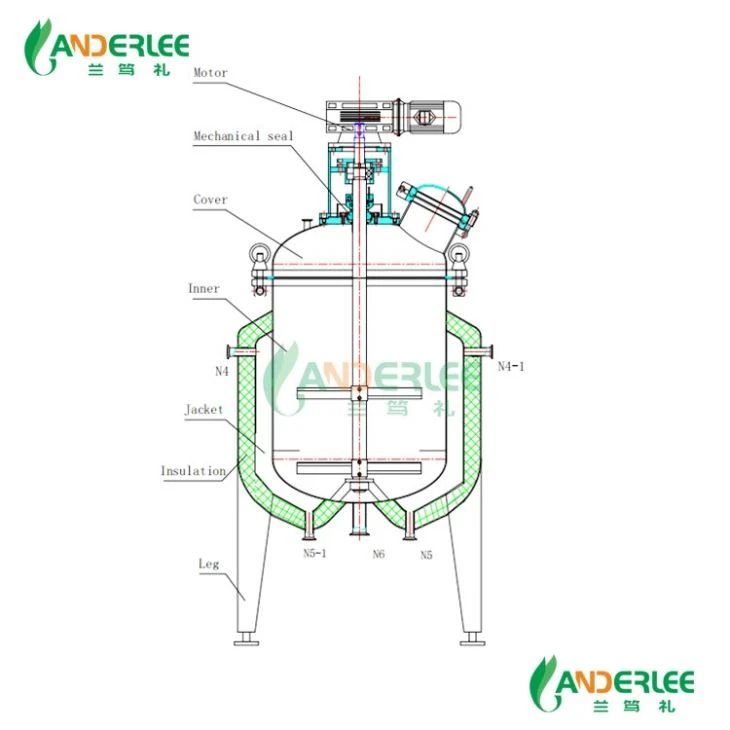
Spray cleaning uses a spray nozzle to distribute the cleaning agent evenly over the reactor surfaces. This method is more efficient for larger reactors and can ensure thorough coverage.
Circulation cleaning involves circulating the cleaning agent through the reactor using a pump. This method is effective for cleaning the internal piping and complex structures of the reactor.
Special Considerations for Different Types of Multi - function Reactors
In addition to the general cleaning requirements, different types of multi - function reactors may have special cleaning considerations. For example, the Winterization Reactor is often used in the production of high - purity oils and fats. It may require more thorough cleaning to remove waxes and other impurities. Alkaline cleaning agents followed by solvent - based cleaning may be necessary to ensure the reactor is clean.
The Crystal Reactor is used for crystallization processes. After crystallization, there may be crystal deposits on the reactor walls. Acidic or enzymatic cleaning agents may be more suitable for removing these deposits without damaging the crystal structure.
Conclusion
Proper cleaning of a multi - function reactor is crucial for its performance and longevity. By understanding the nature of residues, materials of construction, and process requirements, the right cleaning agent can be selected. Whether it is an alkaline, acidic, solvent - based, enzymatic, or a combination of these cleaning agents, each has its own advantages and limitations.
As a multi - function reactor supplier, we are committed to providing our customers with not only high - quality reactors but also comprehensive support on cleaning and maintenance. If you are in the market for a multi - function reactor or need more information on cleaning agents, please feel free to contact us for further discussion and procurement negotiation.
References
- "Handbook of Industrial and Hazardous Wastes Treatment" by Perry A. Robinson, James C. Chiou, and Mark J. Bishop.
- "Cleaning Validation for Pharmaceuticals" by Thomas A. Santella.
- "Chemical Process Equipment: Selection and Design" by Max S. Peters, Klaus D. Timmerhaus, and Ronald E. West.