

In the realm of modern chemical and pharmaceutical industries, the ability to precisely control reaction processes is of paramount importance. A Multi - function Reactor stands at the forefront of this technological advancement, offering a wide range of capabilities to optimize and manage chemical reactions. As a leading supplier of Multi - function Reactors, we understand the intricacies involved in controlling reaction processes and are eager to share our insights with you.
I. Understanding the Basics of a Multi - function Reactor
A Multi - function Reactor is a highly versatile piece of equipment designed to perform various chemical reactions under different conditions. It combines multiple functions such as heating, cooling, stirring, and pressure control within a single unit. This versatility allows it to handle a diverse range of reactions, from simple organic synthesis to complex biochemical processes.
One of the key advantages of a Multi - function Reactor is its flexibility. It can be easily configured to meet the specific requirements of different reactions. For example, the Crystal Reactor is designed specifically for crystallization processes. It can precisely control temperature, agitation, and cooling rates to promote the formation of high - quality crystals. On the other hand, the Winterization Reactor is used in the purification of oils and fats, where it helps to remove unwanted waxes and other impurities by controlling the temperature and filtration process.
II. Controlling Temperature
Temperature is one of the most critical factors in controlling a chemical reaction. Different reactions have different optimal temperature ranges, and even a slight deviation can significantly affect the reaction rate, yield, and product quality.
Our Multi - function Reactors are equipped with advanced temperature control systems. These systems use high - precision sensors to continuously monitor the temperature inside the reactor. When the temperature deviates from the set value, the control system automatically adjusts the heating or cooling mechanism to bring the temperature back to the desired level.
For example, in an exothermic reaction, where heat is released during the reaction, the cooling system in the reactor can be activated to remove the excess heat. This not only helps to maintain a stable reaction temperature but also prevents runaway reactions that can be dangerous. Conversely, in an endothermic reaction, which requires heat input, the heating system can be precisely controlled to supply the necessary energy.
III. Controlling Pressure
Pressure also plays a crucial role in many chemical reactions. Some reactions are carried out at high pressures to increase the reaction rate or to favor the formation of certain products. In contrast, others may require low pressures to prevent side reactions or to facilitate the evaporation of solvents.
Our Multi - function Reactors are designed to handle a wide range of pressures. They are equipped with pressure sensors and valves that allow for precise pressure control. The pressure can be adjusted according to the specific requirements of the reaction, and the control system continuously monitors the pressure to ensure that it remains within the safe and optimal range.
For instance, in a hydrogenation reaction, high pressure is often used to increase the solubility of hydrogen gas in the reaction mixture, thereby accelerating the reaction. Our reactors can accurately maintain the required high pressure throughout the reaction process, ensuring a consistent and high - yield result.
IV. Controlling Agitation
Agitation is essential for ensuring uniform mixing of reactants, heat transfer, and mass transfer within the reactor. Proper agitation helps to prevent the formation of concentration gradients and hotspots, which can lead to inconsistent reaction results.

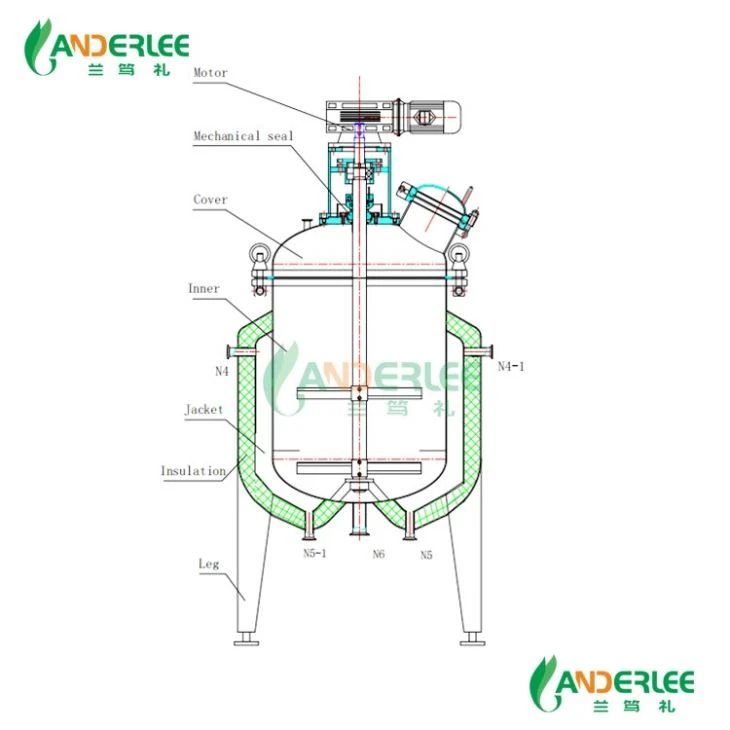
In our Multi - function Reactors, the agitation system can be customized based on the type of reaction and the properties of the reactants. We offer a variety of agitator designs, such as paddle agitators, anchor agitators, and turbine agitators. Each design is optimized for different applications, whether it is a highly viscous reaction mixture or a low - viscosity solution.
The speed of the agitator can also be precisely controlled. This is important because different reactions require different agitation speeds. For example, in a reaction where the reactants need to be gently mixed, a low agitation speed may be sufficient. In contrast, in a reaction where rapid mass transfer is required, a higher agitation speed may be necessary.
V. Controlling Reactant Addition
The rate and timing of reactant addition can have a significant impact on the reaction outcome. In some reactions, the slow and controlled addition of reactants can help to prevent sudden exothermic reactions or the formation of unwanted side products.
Our Multi - function Reactors are equipped with dosing systems that allow for precise control of reactant addition. These dosing systems can be programmed to add reactants at a constant rate, in a step - wise manner, or according to a specific time - dependent profile. This ensures that the reactants are added in a way that is most favorable for the reaction.
For example, in a polymerization reaction, the slow addition of monomers can help to control the molecular weight and distribution of the polymer product. Our reactors can precisely regulate the addition of monomers to achieve the desired polymer properties.
VI. Monitoring and Feedback Control
To ensure the optimal performance of the reaction process, continuous monitoring and feedback control are essential. Our Multi - function Reactors are integrated with advanced monitoring systems that can measure various parameters such as temperature, pressure, pH, and reactant concentrations in real - time.
The data collected by these monitoring systems is sent to a control unit, which uses sophisticated algorithms to analyze the data and make adjustments to the reactor's operating parameters. This feedback control mechanism allows for quick responses to any changes in the reaction conditions, ensuring that the reaction remains on track and produces high - quality products.
For instance, if the pH of the reaction mixture deviates from the desired value, the control system can automatically add an acid or a base to adjust the pH. This real - time adjustment helps to maintain the optimal reaction environment and improve the overall reaction efficiency.
VII. Conclusion and Invitation to Contact
In conclusion, a Multi - function Reactor is a powerful tool for controlling reaction processes in various industries. Its ability to precisely control temperature, pressure, agitation, reactant addition, and other parameters makes it an indispensable asset for achieving high - quality products and efficient production.
As a trusted supplier of Multi - function Reactors, we are committed to providing our customers with the best - in - class equipment and technical support. Our reactors are designed with the latest technology and highest quality standards to ensure reliable and consistent performance.
If you are interested in learning more about our Multi - function Reactors or would like to discuss your specific reaction process requirements, we encourage you to contact us for a detailed consultation. Our team of experts is ready to assist you in finding the most suitable solution for your needs.
References
- Smith, J. (2018). Chemical Reaction Engineering. Wiley.
- Levenspiel, O. (1999). Chemical Reaction Engineering (3rd ed.). Wiley.
- Perry, R. H., & Green, D. W. (2007). Perry's Chemical Engineers' Handbook (8th ed.). McGraw - Hill.