

What are the methods for recovering water - miscible solvents in a plant?
In a modern industrial setting, the recovery of water - miscible solvents is of great significance. Not only does it contribute to environmental protection by reducing waste and emissions, but it also offers economic benefits through cost - savings on raw materials. As a solvent recovery plant supplier, I am well - versed in the various methods available for recovering water - miscible solvents in a plant.
Distillation
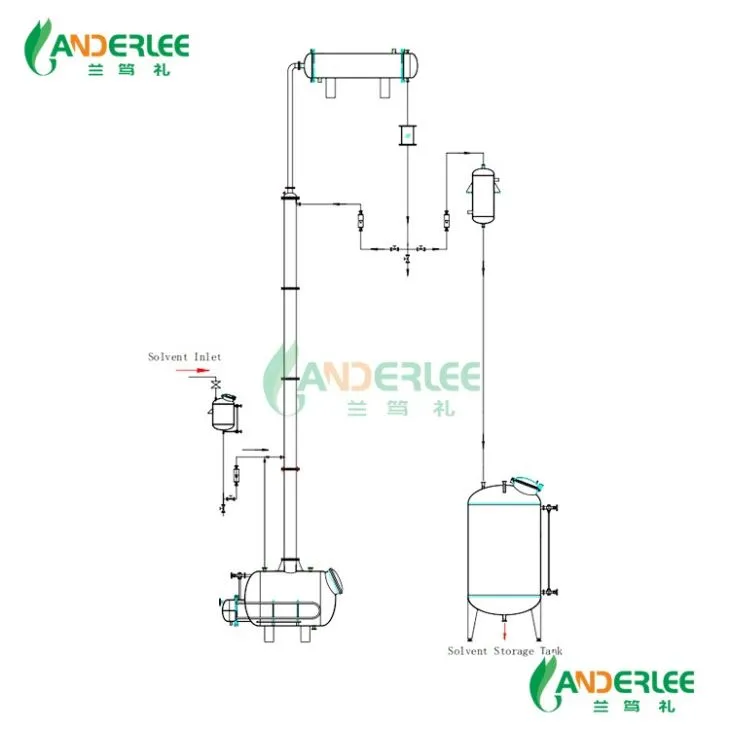
Distillation is one of the most commonly used methods for solvent recovery. It takes advantage of the differences in boiling points between the solvent and water. The process involves heating the mixture of the water - miscible solvent and water to vaporize the components with lower boiling points.
When it comes to water - miscible solvents like ethanol, the Ethanol Recovery Tower is an excellent solution. Ethanol Recovery Tower is designed to efficiently separate ethanol from water. The tower allows the vaporization of ethanol at its boiling point, and then the vapors are condensed and collected as the recovered solvent. This method is highly effective because ethanol has a significantly lower boiling point than water.
The Super Gravity Solvent Distillation Device also plays a crucial role in the distillation process. Super Gravity Solvent Distillation Device utilizes the principle of high - gravity technology to enhance the mass - transfer efficiency during distillation. In this device, the centrifugal force generated by high - speed rotation provides a much larger contact area between the liquid and vapor phases. This results in a faster and more efficient separation of water - miscible solvents from water, reducing the energy consumption and improving the overall recovery rate.
Membrane Separation
Membrane separation is another important method for recovering water - miscible solvents in a plant. This method uses semi - permeable membranes that allow certain components to pass through while blocking others.
There are different types of membranes used for solvent recovery, such as reverse osmosis membranes and pervaporation membranes. Reverse osmosis membranes can separate solvents from water by applying pressure to force the water through the membrane, leaving the solvent behind. Pervaporation membranes work differently. In this case, the liquid mixture is in contact with one side of the membrane, and the solvent preferentially permeates through the membrane in a vapor state on the other side due to a partial pressure difference.
One of the advantages of membrane separation is its ability to operate at relatively low temperatures. This is beneficial for heat - sensitive water - miscible solvents, as it reduces the risk of solvent degradation. Additionally, membrane separation systems can be easily integrated into existing production processes, providing a flexible solution for solvent recovery.

Adsorption
Adsorption is a method that uses adsorbents to selectively adsorb the water - miscible solvent from the mixture. Common adsorbents include activated carbon, silica gel, and zeolites.
Activated carbon has a large surface area and high porosity, which makes it an effective adsorbent for many water - miscible solvents. When the mixture passes through a bed of activated carbon, the solvent molecules are attracted to the surface of the carbon and are retained. After the adsorption process is complete, the solvent can be recovered from the adsorbent by desorption. Desorption can be achieved through methods such as heating or reducing the pressure.
Silica gel and zeolites are also widely used as adsorbents. They have specific pore sizes and surface properties that can preferentially adsorb certain solvents. For example, zeolites can be engineered to adsorb specific water - miscible solvents based on their molecular size and polarity.
The advantage of adsorption is its simplicity and relatively low energy consumption. It can be used for the recovery of solvents at low concentrations in the mixture. However, the capacity of the adsorbent needs to be carefully considered, and regular regeneration of the adsorbent is required to maintain its performance.
Extraction
Extraction is a process that uses a suitable extracting agent to separate the water - miscible solvent from the water. The extracting agent should have a high affinity for the solvent and be immiscible with water.
In a plant, the mixture of water and water - miscible solvent is mixed with the extracting agent in a extraction column. The solvent is transferred from the water phase to the extracting agent phase. After separation of the two phases, the solvent can be recovered from the extracting agent through further distillation or other separation methods.
The choice of extracting agent is crucial in this method. It should have good selectivity for the solvent, high solubility for the solvent, and low toxicity. Additionally, the extracting agent should be easy to regenerate and reuse to reduce costs.
Crystallization
Although not as commonly used as other methods, crystallization can also be used for the recovery of certain water - miscible solvents. Some solvents have different solubility characteristics in water at different temperatures. By cooling the mixture, the solvent may crystallize out of the solution.
The crystals can then be separated from the remaining solution through filtration or centrifugation. This method is suitable for solvents that have a significant decrease in solubility with decreasing temperature. However, it may require precise temperature control and may be limited to solvents with specific solubility properties.
In conclusion, there are multiple methods available for recovering water - miscible solvents in a plant. Each method has its own advantages and disadvantages, and the choice of method depends on various factors such as the type of solvent, the concentration of the solvent in the mixture, the required purity of the recovered solvent, and the available resources and equipment in the plant. As a solvent recovery plant supplier, we are able to provide customized solutions based on the specific needs of different plants. If you are interested in our solvent recovery products and services, please feel free to contact us for further discussions and procurement negotiations.
References
- Perry, R. H., & Green, D. W. (1997). Perry's Chemical Engineers' Handbook. McGraw - Hill.
- Noble, R. D., & Stern, S. A. (1995). Membrane Separations Technology: Principles and Applications. Elsevier.
- Seborg, D. E., Edgar, T. F., & Mellichamp, D. A. (2016). Process Dynamics and Control. Wiley.